
How do I reduce repeated line faults caused by small bottles?
Practical guidance for small bottles: turn recurring faults into controlled inspection, service and replacement actions.
Direct answer
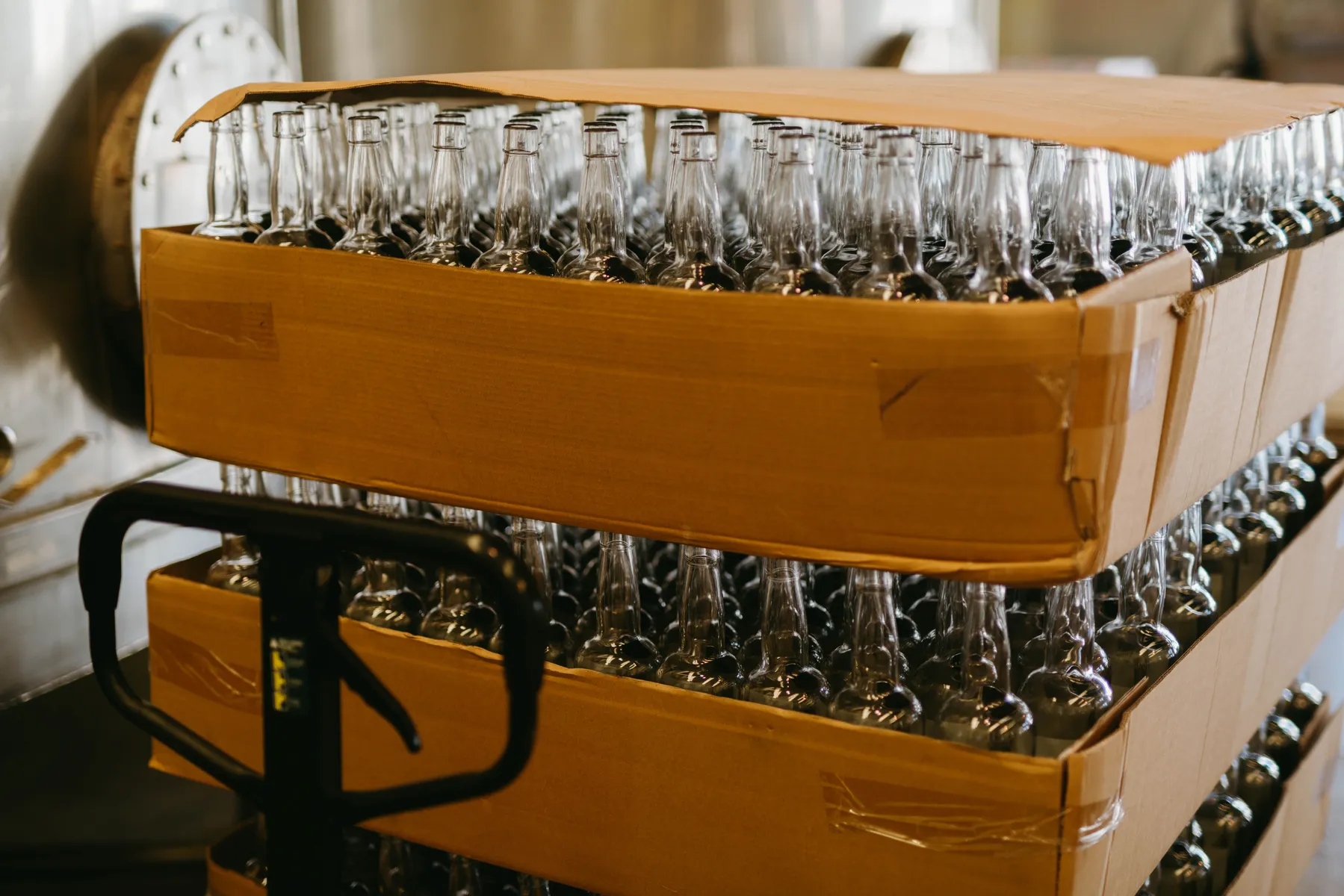
For small bottles, create a fault log with time, product and symptoms before changing several settings at once. This is a packaging format where dimensions, material, centre of gravity, opening, closure and contact surfaces affect machine handling for small bottles. Use representative product and packaging, keep the order of results and identify the first point where the process moves outside the agreed limit. Then make one controlled change, repeat the same test and compare sustained good output rather than a single successful pack.
MTBF, MTTR and repeat fault history
Record operating time between failures, repair time, component replaced and the initiating condition. Repeated resets without the earliest fault evidence do not establish root cause.
Application measure: For container and pack handling, include dimensional variation, base stability, guide contact, scuffing, transfer gaps and damage rate.
Bottle Filling Machines
Bottle filling for liquid and viscous products.
What usually causes this?
- the same alarm is reset without finding the initiating event
- wear parts are replaced only after failure
- lubrication, air quality, sensors or electrical connections deteriorate gradually
- fault history and replaced parts are not recorded consistently
- the equipment or method is not configured for a packaging format where dimensions, material, centre of gravity, opening, closure and contact surfaces affect machine handling for small bottles.
Checks to make in order
- Create a fault log with time, product and symptoms
- Find the earliest abnormal event
- Inspect wear, alignment, sensors, air and electrical connections
- Set replacement intervals for critical parts
- Control recipes and changeover settings
- Verify the repair under representative load
- Review recurrence after an agreed period
How to decide the next step
Small bottles is a packaging format where dimensions, material, centre of gravity, opening, closure and contact surfaces affect machine handling for small bottles. Use the measurements to decide whether the next action is a material or packaging change, a setting correction, a maintenance task, improved feeding or a different machinery principle.
If the process cannot achieve the required reliability and maintenance result across the full product and pack range, compare the best-matched route against a written acceptance test. Include cleaning, changeover, operator work, rejects and recovery from normal stops.
What to include in your production brief
Supplying the information below makes it easier to distinguish a setup problem from a product, packaging, feeding, maintenance or machinery limitation:
- Pack drawing and representative samples
- Minimum and maximum dimensions
- Material, wall thickness and stiffness
- Opening, neck or sealing area details
- Required orientation and line direction
- Current and required good output
- Samples that represent small bottles
- A short video of the present process and fault
Relevant solution websites
The first route is the primary match for this question. Final suitability must be confirmed with samples, output, site and acceptance information.
Related questions
 Pack formats
How do I transfer small bottles between packaging machines?
Practical guidance for small bottles: coordinate product flow, controls, accumulation, guarding and restart behaviour.
Read the answer → Pack formats
How do I improve the appearance and consistency of small bottles?
Practical guidance for small bottles: improve appearance, seal, closure, code, dose and transport performance.
Read the answer → Pack formats
How do heat, moisture and static affect small bottles?
Practical guidance for small bottles: understand how the production environment changes product and machine behaviour.
Read the answer → Pack formats
How do I reduce repeated line faults caused by spouted pouches?
Practical guidance for spouted pouches: turn recurring faults into controlled inspection, service and replacement actions.
Read the answer → Pack formats
How do I reduce repeated line faults caused by square bottles?
Practical guidance for square bottles: turn recurring faults into controlled inspection, service and replacement actions.
Read the answer → Pack formats
How do I reduce repeated line faults caused by squeeze tubes?
Practical guidance for squeeze tubes: turn recurring faults into controlled inspection, service and replacement actions.
Read the answer →