
How do I fill chilled liquids safely?
Practical guidance for chilled liquids: control product, machinery, operator and site hazards through competent assessment.
Direct answer
For chilled liquids, assess the complete task, product, machine and site before relying on one guard or component. The result depends on product behaviour, supply conditions, dosing principle, nozzle design and container control. First, complete a competent task and machinery risk assessment and record measured fill weight or volume, cycle time and finished-pack leakage. Make one controlled change at a time so the original cause is not hidden by several new settings.
Risk-control verification
Stop and isolate before inspection. Record the task, hazard, existing safeguard and required control; output improvement must never rely on bypassing guarding, interlocks or procedures.
Application measure: For filling applications, include fill mass or volume, product temperature, viscosity, supply level or pressure, nozzle condition and finished-pack leakage.
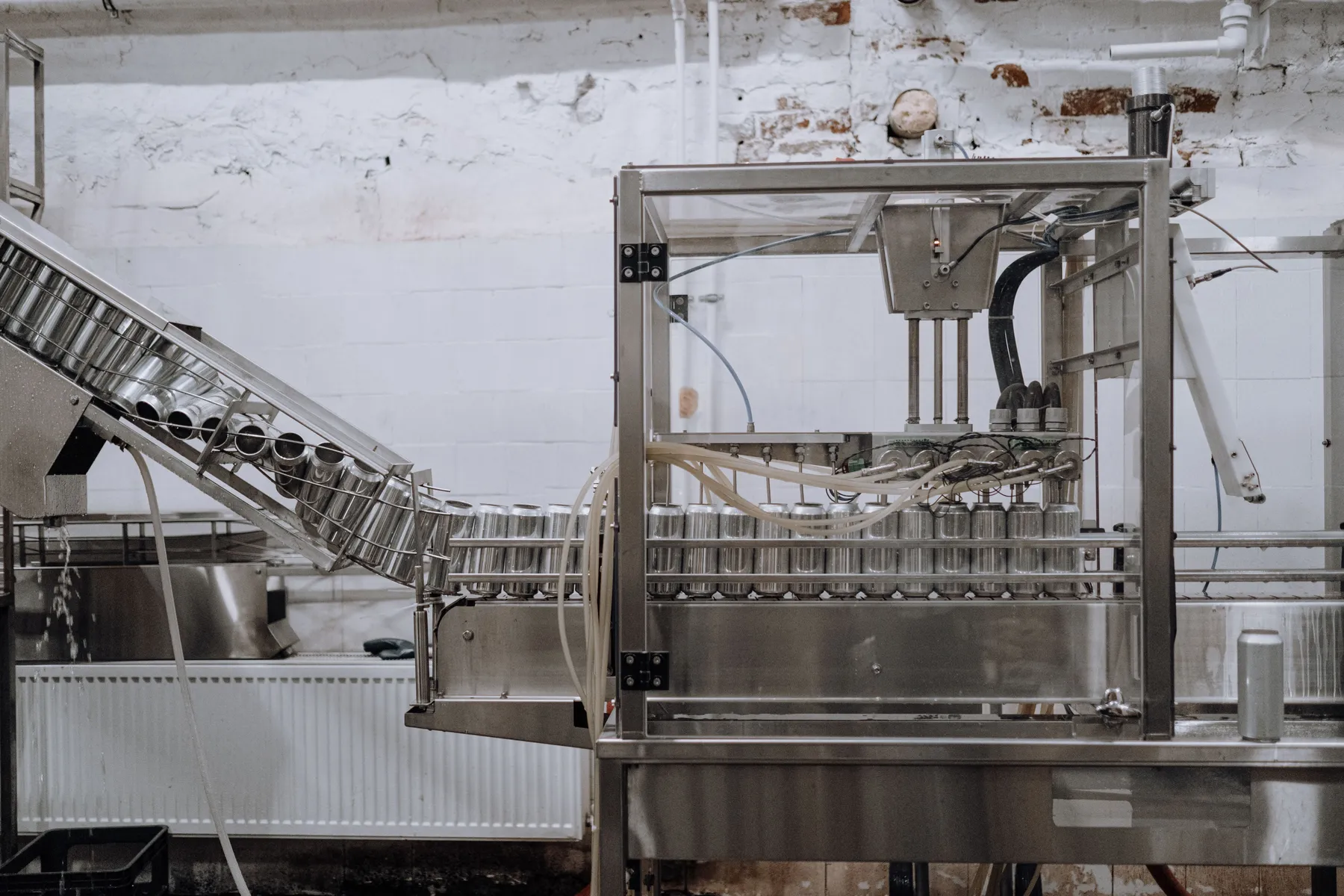
Liquid Fillers
See the machinery and application options most closely matched to this production question.
What usually causes this?
- access needed for loading, clearing or cleaning not considered in the design
- A change in product temperature and viscosity or product supply pressure or level.
- hazardous product properties not included in the machinery specification
- The equipment or handling method not being set for products whose viscosity, condensation or temperature changes line behaviour.
- unexpected movement or stored energy during intervention
Checks to make in order
- Complete a competent task and machinery risk assessment
- Record measured fill weight or volume, cycle time and finished-pack leakage using a representative sample.
- Review product safety data and site classifications
- Check dosing chamber, pump or valve condition, nozzle position and shut-off and container location beneath the fill point.
- Identify every routine intervention and fault-clearing task
- Verify isolation, guarding, interlocks and emergency stops
- Train operators and record any repeated workaround
How to decide the next step
Chilled liquids involves products whose viscosity, condensation or temperature changes line behaviour. Use competent engineering and compliance support for hazardous, ATEX, chemical, pharmaceutical and other regulated applications.
If adjustment and maintenance cannot hold the required result across the complete product and pack range, compare the machinery route against a written acceptance test. The important comparison is sustained good output—not only maximum cycle speed.
What to include in your production brief
Supplying the information below makes it much easier to distinguish a setup problem from a machinery or packaging limitation:
- Product formulation or safety data
- Normal filling temperature
- Minimum and maximum dose
- Acceptable fill tolerance
- Container and neck dimensions
- Required good packs per hour
- Samples that represent chilled liquids
- A short video of the current process and fault
Relevant solution websites
These specialist sites match the production process discussed above. Final suitability should be confirmed with samples, output, site and acceptance information.
Related questions
 Liquid filling
How do I connect a chilled liquids filler to the rest of the line?
Practical guidance for chilled liquids: coordinate product flow, controls, accumulation, guarding and restart behaviour.
Read the answer → Liquid filling
How should I check fill accuracy and pack quality for chilled liquids?
Practical guidance for chilled liquids: define what a good pack is and how defects will be detected and handled.
Read the answer → Liquid filling
How do I move from manual filling to automatic production for chilled liquids?
Practical guidance for chilled liquids: move from manual to semi-automatic and automatic production in sensible stages.
Read the answer → Liquid filling
How do I fill thin free-flowing liquids safely?
Practical guidance for thin free-flowing liquids: control product, machinery, operator and site hazards through competent assessment.
Read the answer → Liquid filling
How do I fill foamy liquids safely?
Practical guidance for foamy liquids: control product, machinery, operator and site hazards through competent assessment.
Read the answer → Liquid filling
How do I fill viscous liquids safely?
Practical guidance for viscous liquids: control product, machinery, operator and site hazards through competent assessment.
Read the answer →